Showing posts with label flower meanings. Show all posts

Tuesday, May 29, 2012

Flower of the Week

Camellia


In the eyes of the Chinese, the symmetrical petals of the camellia flower reflect the spirit of a lady, and the calyx holding the petals represents the young man who will protect her. The calyx of most plants remains after the petals have dropped, but the camellia's calyx falls with the petals when the flower dies. This symbolizes an everlasting union between lovers. In many parts of China, the camellia is considered the most favorable flower to be worn by young people to attract a marriage partner. 

Camellias became the height of fashion as a corsage in 1940s America. In Temple City, California, the first Camellia festival was celebrated in 1945, with people gathering to admire vast floats of flowers. Annual camellia festivals spread across the United States in this decade and in the 1950s. 

Unlike some flowers, which can have negative as well as positive meanings, camellias always symbolize good fortune. Not only are they emblems of love, but they are also lucky, especially when presented to a man. 

The beauty of Camellia flowers inspired Victorian lovers to choose them to express decoration, but different flower colors varied in meaning:

The pink camellia: "I long for you"
The red camellia: "You are a flame in my heart"
The white camellia: "You are adorable"*


*Excerpt from The Secret Language of Flowers, by Samantha Gray

Saturday, May 19, 2012

Flower of the Week

Viburnum

Viburnum opulus


Viburnum, commonly referred to as snowball bush, is highly similar in appearance to hydrangea. It is an extremely popular landscaping plant, due to its dramatic appearance as a large bush with hundreds of pompom-like blooms on each bush.

Viburnum is a national symbol of Ukraine, and is frequently mentioned in Ukrainian folklore, art and traditional embroidery. Kalyna, the plant's name in the Ukrainian language, is referenced in the title of the Ukrainian Insurgent Army's anthem: Chervona Kalyna.

The history of viburnum's link to Ukrainian culture can be traced back to the beginning of Slavic paganism. According to Slavic mythology, Kalyna was associated with the birth of the universe as part of the Fire Trinity: the Sun, the Moon and the Star, with the berries of the flowering bush symbolizing blood and family roots. Kalyna is also a symbol of the beauty of young women in Ukrainian culture. 


Saturday, May 12, 2012

Flower of the Week

Poppies
Papaveraceae


Long symbolic of eternal life, poppies were placed in ancient Egyptian burial tombs. The ancient Greeks offered poppies to Demeter, the goddess of fertility, and Diana, goddess of the hunt. Greek athletes were given a mixture of poppy seeds, honey, and wine. The Romans also believed that poppies could help to heal a broken heart.

Saturday, May 5, 2012

Flower of the Week

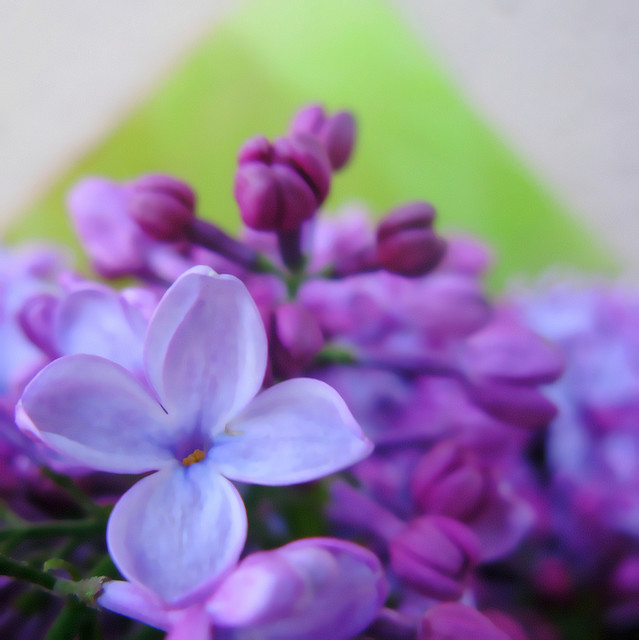
Lilac
Syringa vulgaris


According to Greek mythology, Syringa was a beautiful nymph who captivated Pan, the god of the forests and fields. Pan chased Syringa through his domain until, finally, Syringa was exhausted and could only escape by turning herself into a plant - the fragrant flower we know now as lilac.

Lilac's meanings of first love and youthful innocence arise from its flowering time being a harbinger of spring. Purple-flowering lilacs convey the first emotion sof love, whereas white or pink flowering lilacs are associated with youthful innocence.  In Russian folklore, cradling a newborn beneath a lilac bush would bring the child wisdom. In parts of the Mediterranean, lilac is closely associated with the festival of Easter because it so often blooms around that time. Lilac is also the flower for eighth wedding anniversaries. *


*Excerpt from The Secret Language of Flowers by Samantha Grey

Saturday, March 24, 2012

Flower of the Week: the Pansy


We had this precious jar of pansies on the windowsill today, and what better opportunity than this to snap a cute photo of our flower of the week? 

Pansies are a type of violet that hold a special place in the hearts and minds of writers and storytellers; the symbology behind these little flowers knows no bounds. They were a vital ingredient in Celtic love potions, a fact which Shakespeare referenced in his master comedy A Midsummer Nights' Dream when Fairy Queen Titania awakes with pansy juice and falls in love with the first creature she sees. 

According to folklore, it was commonly believed that the petals of pansies had the power to heal a broken heart, and courting Victorian lovers often exchanged these flowers on St. Valentine's Day. One German legend says that pansies once had a wonderfully strong scent that was so enticing that people came from far away to smell them, and in the process trampled the surrounding fields. The cattle in these fields found themselves with nothing to eat, and the pansies prayed to God for help. God then took away the pansies' scent and gave the flowers great beauty instead.

Pansies stand for great charm, a gentle, loving nature, and loyal friendship.*


From The Secret Language of Flowers, by Samantha Gray. 


Related Posts Plugin for WordPress, Blogger...